
The management education landscape in Bihar has undergone a massive shift over the last decade. Students often ask during counseling sessions why they should stay in Patna or Bihar for a PGDM when they could head to Delhi or Bangalore. My answer usually starts with a reality check about the return on investment and the specific type of career a student wants to build. While many look for the glitz of corporate towers in Gurgaon, there is a growing segment of smart aspirants who realize that the real growth story of India is happening in the hinterlands. The Development Management Institute (DMI) in Patna has positioned itself right at the heart of this transformation, offering a specialized edge that traditional MBA programs often lack.
From what I have seen over the years, most students confuse a traditional MBA with a PGDM in Development Management. One important thing parents usually miss is that a specialized degree from a government-backed autonomous institute often carries more weight in specific sectors than a generic MBA from a mid-tier private college. DMI is not just another B-school; it was established with a clear mission to create a cadre of professionals who can manage the massive developmental projects of the state and the country. In the Bihar context, where large-scale social interventions like JEEViKA have become global case studies, DMI acts as the finishing school for the managers who run these systems.
Why Students Look for a Good Management College in Bihar
The brain drain from Bihar to other states for higher education is a phenomenon every counselor here deals with. However, the economic reality of middle-class families in Bihar and Jharkhand means that spending twenty lakhs on an MBA in a metro city is often not feasible. When students sit across from me, they are looking for three things: affordability, placement security, and institutional reputation. DMI management college Bihar has successfully addressed these concerns by providing an AICTE-approved curriculum that is deeply rooted in the state’s economic fabric while maintaining national academic standards.
There is also a growing realization that Bihar is a policy playground where managers are made, not just imported. For a management student, this state offers a front-row seat to transformation at scale. Whether it is livelihoods, infrastructure, or gender empowerment, the interventions being piloted here are ambitious. Students choose a management college in Bihar like DMI because they want to understand these systems from the inside rather than just reading about them in a textbook. It is about being where the action is real and raw.
What is DMI and Its Background
To understand why DMI is considered the best PGDM college in Bihar, one must look at its origins. It was established on February 13, 2014, as a high-performing knowledge institution patterned on the vision of the Institute of Rural Management Anand (IRMA). The Government of Bihar recognized that the livelihoods of small producers and marginalized communities could only be enhanced if they were managed by professionals who understood both the community and the market. This led to the creation of DMI as an autonomous institution supported by the Rural Development Department.
The institutional foundation is solid, with active support from the Bihar Rural Livelihoods Promotion Society (JEEViKA) and the Bihar State Milk Co-operative Federation (COMFED). These are not just names on a brochure; they are the architects of the program. From what I have seen during my campus visits, this relationship ensures that the curriculum is always aligned with the latest requirements of the development sector.
Table 1: Institutional Snapshot of DMI Patna
| Feature | Details |
| Year of Establishment | 2014 |
| Type of Institution | Public Autonomous / Government of Bihar Initiative |
| Regulatory Approval | AICTE Approved |
| Primary Focus | Development Management |
| Core Values | Excellence, Innovation, Integrity, Participation |
| Academic Partners | JEEViKA, COMFED, BRLPS |
Why DMI is Considered One of the Best PGDM Colleges in Bihar
One of the strongest arguments for DMI being the best PGDM college in Bihar is its specialization. In a crowded market of general MBA colleges, DMI offers a niche that guarantees a career path. While other colleges struggle to explain their USP, DMI’s mission to empower the grassroots is evident in every term of their program. Students are not just getting a degree; they are joining a mission to transform the rural landscape of India.
The faculty quality is another differentiator that I frequently highlight to aspirants. The professors at DMI aren’t just academics; they are practitioners who have worked with international development agencies and hold degrees from premier institutes like IIMs, IITs, and IRMA. This level of expertise in Patna is rare. Furthermore, the scholarship program is perhaps the most generous in the region, with up to 100% tuition fee waivers for high-performing students.
Table 2: Comparative Advantage Assessment
| Parameter | Traditional MBA in Bihar | DMI PGDM (PDM) |
| Curriculum | Theory-heavy, general corporate focus | 30% Experiential, development focus |
| Faculty | Varies, often local academics | IIM/IIT/IRMA Alumni and Fellows |
| Pedagogy | Classroom lectures and case studies | Immersive field-work and live projects |
| Placement | Broad corporate roles, sales-heavy | Specialized roles in NGOs, Govt, and CSR |
| Cost to Student | Moderate to High | Highly subsidized with massive scholarships |
Details of PGDM Program Offered at DMI
The flagship course at DMI is the two-year full-time Post-Graduate Programme in Development Management (PDM). This program is specifically designed to transform fresh graduates and development practitioners into high-repute professionals. The curriculum structure is unique because it balances management functions like finance, marketing, and HR with social sciences and development theories.
I often explain to students that the “PDM” nomenclature is not just a variation of the MBA name; it represents a different philosophy of management. It focuses on participatory governance and the management of resources for sustainable livelihoods. The program is divided into classroom-based Interactive Learning Terms and intensive field-based Experiential Learning segments.
Eligibility Criteria and Admission Process
Getting a PGDM admission in Bihar at a top-tier institute requires meeting strict quality benchmarks. For DMI, the minimum requirement is a three-year Bachelor’s degree in any discipline with at least 50% marks (45% for SC/ST/DA candidates). Students in their final year can also apply, which is a common query during our counseling sessions.
The selection process is multi-layered. DMI accepts scores from national entrance exams including CAT, XAT, MAT, CMAT, and GMAT. However, the entrance score is only 35% of the total selection weightage. This is something I always tell students to pay attention to—the institute values your personality and writing skills as much as your aptitude scores.
Table 3: Admission Selection Weightage Breakdown
| Component | Weightage (%) |
| Management Entrance Exam Score (CAT/XAT/MAT, etc.) | 35% |
| Group Exercise (GE) | 10% |
| Personal Interview (PI) | 30% |
| Academic Performance (10th, 12th, and Graduation) | 10% |
| Assessment of Writing Skills | 5% |
| Diversity (Sports, Gender, Academic Diversity) | 10% |
Curriculum Design and Industry-Oriented Learning
The DMI curriculum is built around the concept of “Integral Learning.” Approximately 30% of the program is devoted to practical application outside the classroom. This is where DMI truly beats other management colleges in Bihar. They don’t just talk about rural challenges; they send you to live in them.
The experiential learning is divided into three critical modules: Development Immersion (DI), Enterprise Learning (EL), and the Management Internship (MI). In the five-week Development Immersion, students live with marginalized communities to understand their contextual realities. The Enterprise Learning phase focuses on the governance and management of community enterprises like cooperatives. Finally, the ten-week Management Internship allows students to work on real business problems within NGOs or CSR departments.
Faculty Quality and Teaching Approach
One cannot discuss DMI without mentioning its faculty. Professor Debiprasad Mishra, the Director, is a Fellow from IIM Ahmedabad and brings decades of experience to the table. The core faculty members are graduates and PhD holders from institutions like JNU, IIT Dhanbad, and the University of Reading in the UK. From what I have observed, the faculty-student ratio is excellent, allowing for the “reflective dialoguing processes” that the institute prides itself on.
The teaching approach isn’t just about finishing the syllabus. They use guest lectures from leaders in the corporate and development sectors to provide a holistic perspective. I’ve spoken to students who mention that the professors at DMI are more like mentors who guide you through the complexities of social systems rather than just lecturers.
Infrastructure, Campus Life, and Learning Environment
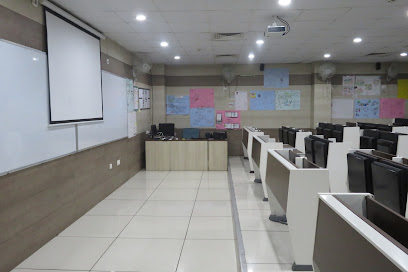
At present, DMI is operating from a transit campus at Udyog Bhawan, East Gandhi Maidan, Patna. While it is a high-quality facility with air-conditioned classrooms and a multimedia-equipped auditorium, the real excitement is about the upcoming permanent campus in Bihta. This new 15-acre campus is being built with an investment of roughly 250 crores and is designed to be a state-of-the-art residential facility.
The new Bihta campus will feature G+7 hostel buildings, common centers, and a dedicated academic block. It is being developed as an eco-friendly space with green corridors, agro-ecological farms, and earthquake-resistant structures. For the 2026 batch, the transition to this world-class infrastructure will be a significant advantage, moving them next to other premier institutes like NIT Patna.
Placement Support and Career Opportunities
One thing students often ask during counseling is whether the “Development” focus limits their job options. The truth is exactly the opposite. DMI graduates are in high demand because they can manage complexity in environments where traditional MBA graduates fail. The DMI PGDM placement record has been 100% since inception, with students finding roles in government departments, international agencies, and major corporate CSR units.
The placement cell provides extensive training, including mock interviews and industry interactions, to ensure students are ready for the professional world. From my discussions with the placement team, the demand for “Impact Managers” who understand the grassroots is scaling aggressively in the current economy.
Average Salary, Top Recruiters, and Career Growth
While development sector salaries may not always match the highest brackets of high-finance roles, they are very competitive, especially considering the low cost of living in Bihar and the high job satisfaction. The average salary has consistently hovered around 5 to 5.5 LPA, with the highest packages reaching up to 8 LPA.
Top recruiters include a mix of government bodies and private foundations. JEEViKA is a regular recruiter, along with the Bihar State Milk Co-operative Federation (COMFED). Other prominent names include TechnoServe, Syngenta Foundation India, and Small Finance Banks like Ujjivan. The career growth in this sector is unique because it often leads to leadership roles in massive social transformation projects.
Table 4: DMI Placement and Recruiter Profiles
| Placement Metric | Data Points |
| Highest Package | INR 7.8 – 8 LPA |
| Average Package | INR 5 – 5.5 LPA |
| Top Recruiter (Govt) | JEEViKA, JSLPS, BGSYS |
| Top Recruiter (Dairy/Agri) | COMFED, Syngenta, TechnoServe |
| Top Recruiter (NGO/CSR) | Tata Trusts, Care India, Aga Khan Rural Support |
| Top Recruiter (Finance) | Ujjivan Small Finance, Samasta Microfinance |
How DMI PGDM is Different from Traditional MBA Colleges
This is the most common part of my counseling sessions—explaining the difference between an MBA and DMI’s PDM. Traditional MBA colleges focus heavily on corporate frameworks and profit optimization. DMI’s program blends those management theories with governance, sustainability, and social systems. In a traditional MBA, you learn to sell products; at DMI, you learn to build systems that change lives.
Another critical difference is the immersive fieldwork. Most MBA programs offer a symbolic two-month summer internship. At DMI, you spend nearly six months of your two-year program working on-site in various capacities. This deep connection with the “real India” makes DMI graduates far more versatile in handling complex, high-responsibility environments.
Who Should Choose DMI for PGDM
DMI is the right choice for students who have a sense of purpose. If you are passionate about making a difference and want a management career that feels meaningful, this is your place. It is also ideal for students from middle-class families in Bihar and Jharkhand who want high-quality management education without the crippling burden of large education loans.
I usually advise students that if they are interested in rural development, social entrepreneurship, or public policy, they should choose DMI over any other general management college in the region. It is for the “Impact Manager” of tomorrow—someone who understands data like a technocrat and communities like a grassroots practitioner.
Things Students Should Know Before Taking Admission
Before signing up, there are a few practical things you should keep in mind. First, this is a residential program. You are required to stay in the hostel for the entire duration, which builds a strong community but leaves little room for outside distractions. Second, the field immersions can be physically and mentally demanding. You will be sent to remote areas where basic amenities might be scarce.
One important thing parents usually miss is that the batch size is very small—only 60 seats. This means it is a highly selective environment. You should also be aware that the program is sectoral; while you will be a manager, your career path will primarily be within the development and social impact sectors.
Career Scope After Completing PGDM from DMI
The career scope after DMI is surprisingly wide. You could be shaping policies with government bodies, driving corporate social responsibility in multinational corporations, or fostering social innovation through your own social enterprise. The skills you learn—stakeholder mapping, outcome-based management, and digital transformation for underserved markets—are now being craved by corporations as well.
The next decade will be dominated by sectors like sustainable development, climate-tech, and rural innovation. DMI puts you at the heart of this “new economy.” Whether it is working with SHGs or managing district-level programs, the impact you create translates into a very robust professional resume.
Honest Final Opinion: Is DMI Worth It for Management Aspirants in Bihar?
If you are looking for an affordable, high-repute, and job-guaranteed management education in Patna, DMI is worth every rupee. The combination of government backing, world-class faculty, and the imminent shift to a massive new campus in Bihta makes it a top choice. The low fees of around 6 lakhs, coupled with the scholarship fund, provide a return on investment that is hard to match anywhere else in the country.
My final advice? Don’t just look at the salary package on day one. Look at the kind of leader you will become. DMI doesn’t just prepare you for placements; it prepares you for India’s next decade of development. If you have the heart for the grassroots and the mind for management, DMI is your launchpad.
SEO Meta Details
Meta Title: DMI Patna: Best PGDM Management College in Bihar Meta Description: Discover why DMI Patna is the best PGDM college in Bihar. Get details on fees, 100% placement, scholarships, and the upcoming world-class Bihta campus.
Frequently Asked Questions (FAQs)
1. Is DMI a private or government institution? DMI is an autonomous institution established by the Government of Bihar. It is supported by state departments like Rural Development and Planning & Development.
2. What is the total fee for the PGDM program at DMI Patna? The total academic fee for the two-year PGDM in Development Management is approximately INR 6 Lakhs. This is payable in term-wise installments.
3. Does DMI provide placement for all its students? Yes, DMI has a dedicated placement cell and has maintained a 100% placement record since its inception, with top recruiters like JEEViKA, Tata Trusts, and Technoserve.
4. What entrance exams are accepted for PGDM admission in Bihar at DMI? DMI accepts valid scores from CAT, XAT, MAT, CMAT, and GMAT examinations. The selection also includes group exercises and personal interviews.
5. Are there any scholarships available for students at DMI? DMI offers significant merit-based scholarships. Depending on your academic performance (GPA) in each term, you can get a tuition fee waiver of 25%, 50%, 75%, or even 100%.